

ZEM Fuel Systems Led Pioneering CMDC3 Project to Demonstrate Ammonia Fuel Cell Technology for Maritime Decarbonisation
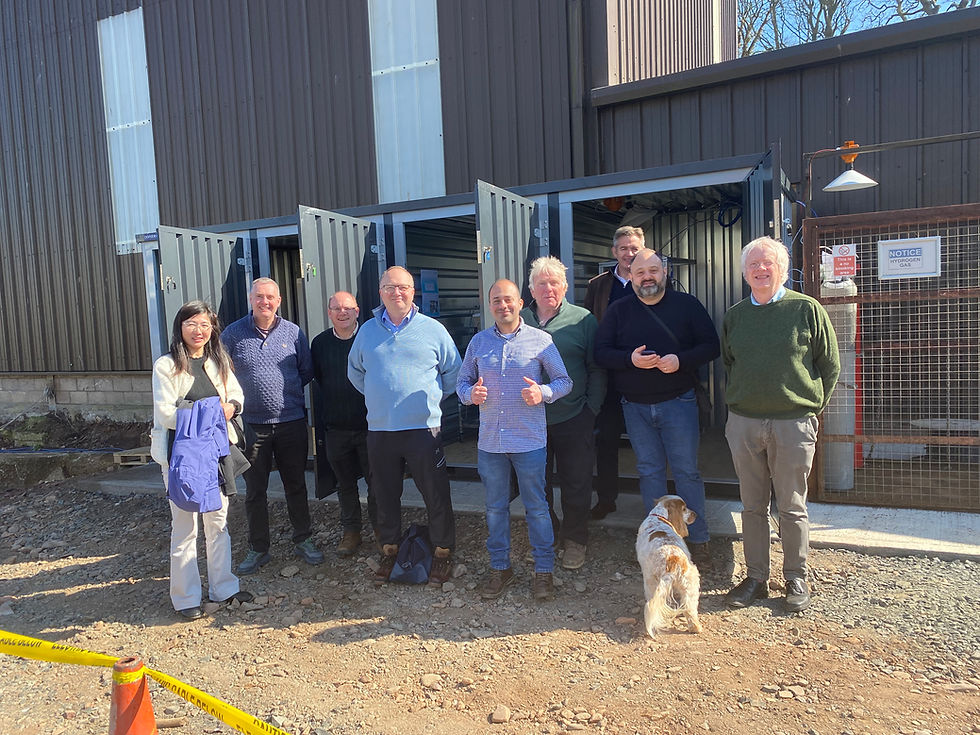
Eyemouth, Scotland — 10 July, 2025 — ZEM Fuel Systems Ltd, in collaboration with partners from both industry and academia, showcased the culmination of their Clean Maritime Demonstration Competition Round 3 (CMDC3) project. The demonstration took place from March- June 2025 at Eyemouth Marine, highlighting the transformative potential of ammonia fuel cell and cracker systems in achieving zero-emission maritime operations. Separate Hydrogen and Nitrogen gas cylinders were used to simulate synthetic ammonia on the demonstration site.
Funded by the UK Department for Transport and delivered in partnership with Innovate UK, the CMDC3 initiative has allocated £60 million to 19 flagship projects aimed at advancing clean maritime solutions. ZEM Fuel Systems Ltd has been at the forefront of this endeavour, developing an ammonia fuel cell and cracker system combined with an auxiliary power unit for cold ironing demonstration. The fuel cell had a power output of 1 KW and successfully powered auxiliary loads on the Srian vessel at Eyemouth Marine.
A cornerstone of this project has been the invaluable collaboration between ZEM Fuel Systems and the University of St Andrews. The partnership has been instrumental in refining the fuel cell technology, ensuring its efficiency and durability for real-world maritime applications. This successful industry-academia synergy was recognised with the Royal Society of Chemistry's Industry-Academia Collaboration Prize in 2023.
Dr. Xiangling Yue, Chief Technology Officer at ZEM Fuel Systems said: “This successful demonstration is the culmination of nearly two years of hands-on innovation and relentless problem-solving. Through a true learning-by-doing approach, we've engineered an integrated system combining ammonia fuel cells, an ammonia cracker, and a battery APU to deliver a viable, zero-emission solution for maritime operations. It's a significant step forward for ZEM to further develop and scale up our ammonia fuel cell technology and cracker system for practical ammonia-based maritime propulsion. I'm incredibly proud of what our team has achieved together.”
Mina Hanna, Project Manager at ZEM Fuel Systems said: “Demonstrating our system to power-up auxiliary loads in the maritime environment is a huge milestone for ZEM. I believe our systems will support the UK reaching its net zero targets in the maritime industry. Special Thanks to the Department for Transport and Innovate UK for supporting innovative technologies that support the decarbonisation of the maritime transport.”
While Dr. Alfredo Damiano Bonaccorso, The Senior Commercialisation Officer at ZEM Fuel Systems added: “The successful demonstration of our ammonia fuel cell technology under the CMDC3 project is a pivotal moment for zero-emission maritime innovation in the UK. This achievement not only proves the viability of ammonia as a clean fuel for auxiliary power, but also highlights the power of collaboration between industry and academia. By working closely with the University of St Andrews and our technical partners, we've taken a significant step toward decarbonising maritime operations. It’s a proud moment for ZEM and a strong signal that scalable, zero-emission solutions are within reach for the maritime sector.”
George Purves, Commercial Director at Eyemouth Marine commented: “It’s been great working with the ZEM team, hosting the final demonstration of the CMDC3 project at Eyemouth Marine. Supporting innovation that advances sustainable maritime technologies aligns with our long-term vision. This collaboration has shown what’s possible when industry and research work together to tackle environmental challenges head-on.”
The project has also benefited from the expertise of several key partners:
Eyemouth Marine Limited: Providing the venue for the final demonstration and offering comprehensive facilities for vessel servicing and maintenance.
SeaKing Electrical Limited: Specialists in marine electrical solutions, contributing to the integration of the ammonia fuel cell system into maritime vessels.
Echandia Marine UK Limited: Experts in battery and electric propulsion systems, aiding in the development of the auxiliary power unit.
Inverness and Cromarty Firth Green Freeport PowerHouse: Part of Inverness and Cromarty Firth Green Free Port. The Powerhouse aided in the outreach of the project to public.
The demonstration at Eyemouth Marine provided stakeholders with a first-hand look at the operational capabilities of the ammonia fuel cell and cracker systems. This event marks a significant milestone in the journey towards sustainable and zero-emission maritime solutions.


About ZEM Fuel Systems:
ZEM Fuel Systems is a Scottish company founded in 2018 that is dedicated to developing innovative zero-emission energy technologies for the maritime industry. Through collaboration with academic institutions and industry partners, ZEM aims to lead the transition towards sustainable maritime operations.
About the University of St Andrews:
The University of St Andrews is one of the UK's leading institutions in fuel cell development, partnering with industry leaders to advance clean energy solutions.
About Eyemouth Marine Limited:
Serving the Southeast of Scotland and beyond, Eyemouth Marine delivers skilled technical support and hands-on expertise in boat servicing, maintenance, and building for all types of vessel.
About SeaKing Electrical Limited:
Founded in 2001, SeaKing Group provides comprehensive electrical solutions to the marine, industrial, commercial, military, and offshore sectors.
About Echandia Marine UK Limited:
Echandia is a leader in battery systems for maritime applications, focusing on sustainable and efficient energy solutions.
About Inverness and Cromarty Firth PowerHouse:
The PowerHouse is part of Inverness and Cromarty Firth Green Free Port- one of the first two green freeports in Scotland. The Powerhouse is a hub for developing green energy skills and supporting commercialisation of low-carbon hydrogen technologies.


